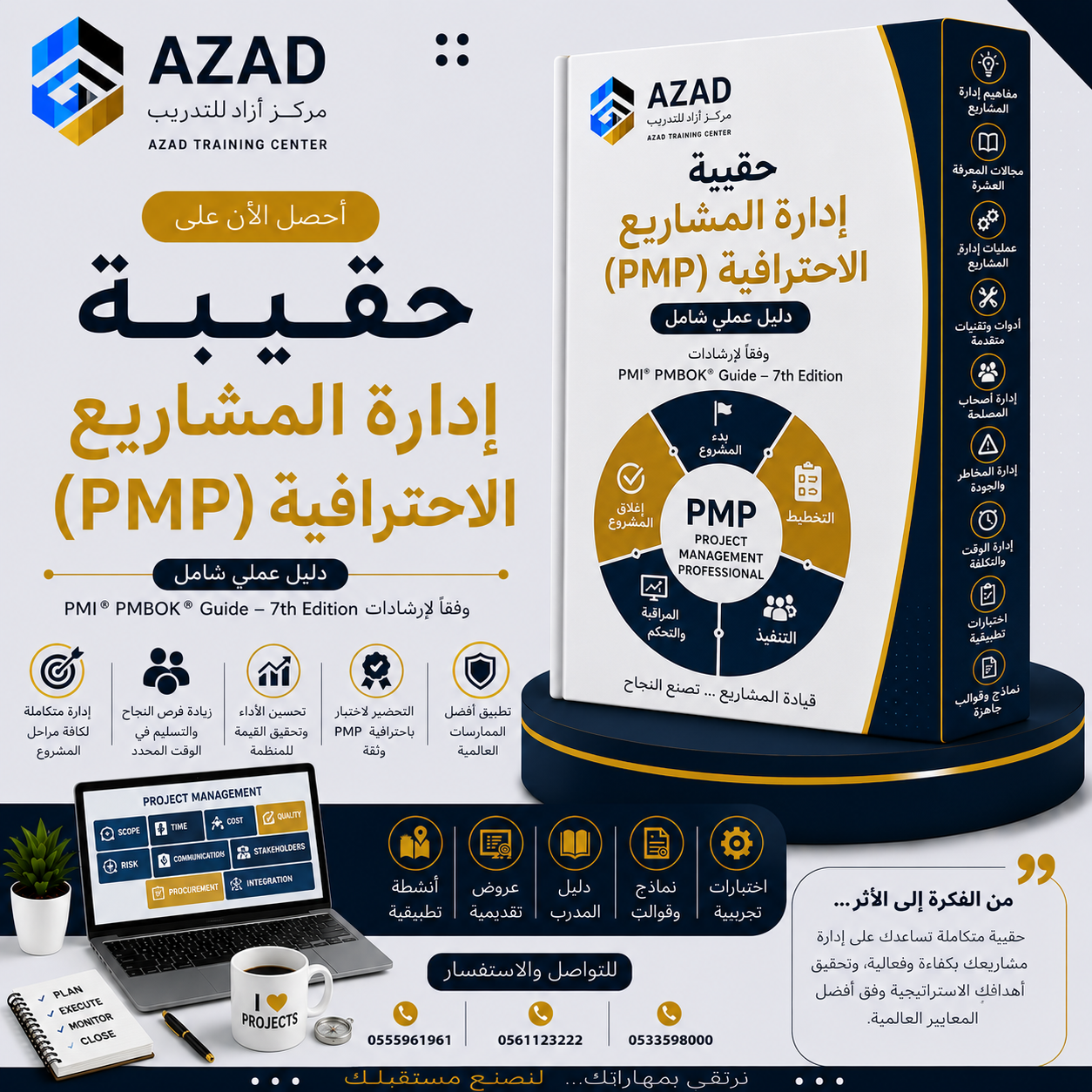
Professional Project Management (PMP) Bag
Duration: 5 days – 25 training hours
Bag description
A specialized training package aimed at qualifying participants to acquire project management skills according to the best global practices and recognized standards in project management (PMP). The bag focuses on all project management phases from planning, execution, monitoring, and control, to closing, with an introduction to tools and techniques for managing time, cost, quality, risks, and human resources to ensure project success and achieve objectives efficiently and effectively.
Overall goal of the bag
The participant gains professional project management skills according to PMP standards, enabling them to successfully lead projects, organize resources, manage risks, and ensure project objectives are achieved on time and within the set budget.
Bag objectives
• Understand the project lifecycle and principles of professional project management.
• Plan and organize project resources and schedules.
• Manage risks and challenges during project implementation.
• Apply tools and methods for controlling quality, cost, and time.
• Prepare projects for closing, analyze performance, and learn from previous experiences.
Target audience
• Current project managers and those wishing to develop their skills according to PMP standards.
• Administrative and supervisory leaders in organizations.
• Employees involved in planning, coordination, and projects.
• Those seeking to obtain an accredited international PMP certification.
Main topics of the bag
• Project lifecycle and principles of project management.
• Planning and organizing resources and timelines.
• Risk and quality management in projects.
• Control and follow-up tools during project execution.
• Project closing, results analysis, and lessons learned.
Features of the bag
• Practical content aligned with global PMP standards.
• Practical applications and effective tools for professional project management.
• Supports the development of professional skills and increases chances of obtaining the international certification.
Application mechanisms
• In-person training
• Remote training
• Practical workshops